找回密碼
 To register

QQ登錄

只需一步,快速開始

掃一掃,訪問微社區(qū)

打印 上一主題 下一主題

Titlebook: New Software Engineering Paradigm Based on Complexity Science; An Introduction to N Jay Xiong Book 2011 Springer Science+Business Media, LL

[復(fù)制鏈接]
查看: 37959|回復(fù): 53
樓主
發(fā)表于 2025-3-21 18:16:04 | 只看該作者 |倒序?yàn)g覽 |閱讀模式
書目名稱New Software Engineering Paradigm Based on Complexity Science
副標(biāo)題An Introduction to N
編輯Jay Xiong
視頻videohttp://file.papertrans.cn/666/665757/665757.mp4
概述New foundation (complexity science) for establishing software engineering paradigm; New software development methodology driven by defect prevention and traceability; New software diagramming paradigm
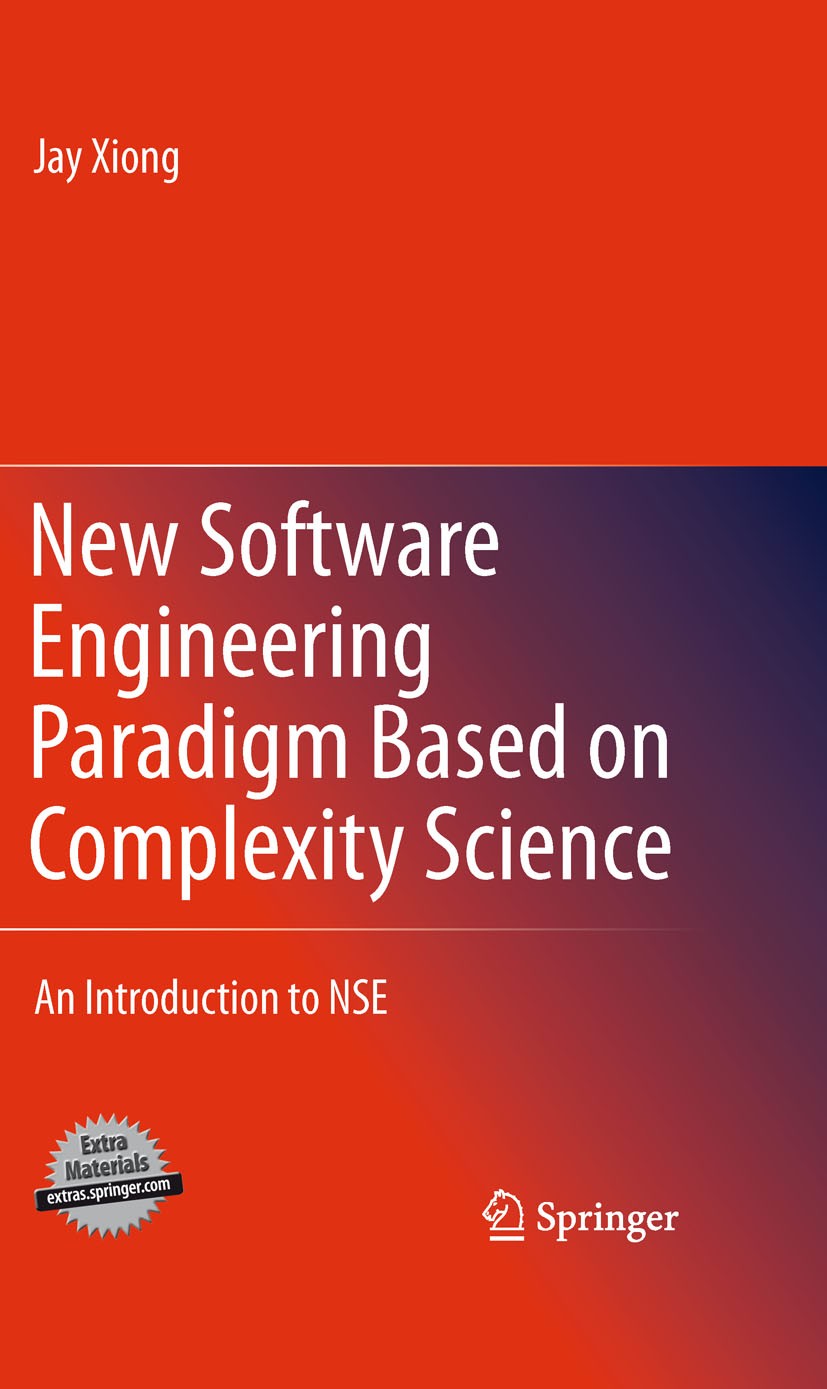
圖書封面Titlebook: New Software Engineering Paradigm Based on Complexity Science; An Introduction to N Jay Xiong Book 2011 Springer Science+Business Media, LL
描述.This book describes a complete revolution in software engineering based on complexity science through the establishment of NSE – Nonlinear Software Engineering paradigm which complies with the essential principles of complexity science, including the Nonlinearity principle, the Holism principle, the Complexity Arises From Simple Rules principle, the Initial Condition Sensitivity principle, the Sensitivity to Change principle, the Dynamics principle, the Openness principle, the Self-organization principle, and the Self-adaptation principle. The aims of this book are to offer revolutionary solutions to solve the critical problems existing with the old-established software engineering paradigm based on linear thinking and simplistic science complied with the superposition principle, and make it possible tohelp software development organizations double their productivity, halve their cost, and remove 99% to 99.99% of the defects in their software products, and efficiently handle software complexity, conformity, visibility, and changeability. It covers almost all areas in software engineering..The tools NSE_CLICK- an automatic acceptance testing platform for outsourcing (or internally
出版日期Book 2011
關(guān)鍵詞Complex Systems; Complexity; Nonlinear Software Engineering; Software Development Methodology; Software
版次1
doihttps://doi.org/10.1007/978-1-4419-7326-9
isbn_softcover978-1-4899-8159-2
isbn_ebook978-1-4419-7326-9
copyrightSpringer Science+Business Media, LLC 2011
The information of publication is updating

書目名稱New Software Engineering Paradigm Based on Complexity Science影響因子(影響力)


書目名稱New Software Engineering Paradigm Based on Complexity Science影響因子(影響力)學(xué)科排名


書目名稱New Software Engineering Paradigm Based on Complexity Science網(wǎng)絡(luò)公開度


書目名稱New Software Engineering Paradigm Based on Complexity Science網(wǎng)絡(luò)公開度學(xué)科排名


書目名稱New Software Engineering Paradigm Based on Complexity Science被引頻次


書目名稱New Software Engineering Paradigm Based on Complexity Science被引頻次學(xué)科排名


書目名稱New Software Engineering Paradigm Based on Complexity Science年度引用


書目名稱New Software Engineering Paradigm Based on Complexity Science年度引用學(xué)科排名


書目名稱New Software Engineering Paradigm Based on Complexity Science讀者反饋


書目名稱New Software Engineering Paradigm Based on Complexity Science讀者反饋學(xué)科排名


單選投票, 共有 0 人參與投票
 

0票 0%

Perfect with Aesthetics


0票 0%

Better Implies Difficulty


0票 0%

Good and Satisfactory


0票 0%

Adverse Performance


0票 0%

Disdainful Garbage

您所在的用戶組沒有投票權(quán)限
沙發(fā)
發(fā)表于 2025-3-21 22:48:00 | 只看該作者
板凳
發(fā)表于 2025-3-22 01:11:47 | 只看該作者
http://image.papertrans.cn/n/image/665757.jpg
地板
發(fā)表于 2025-3-22 05:48:07 | 只看該作者
https://doi.org/10.1007/978-1-4419-7326-9Complex Systems; Complexity; Nonlinear Software Engineering; Software Development Methodology; Software
5#
發(fā)表于 2025-3-22 09:16:59 | 只看該作者
Is the Old-Established Software Engineering Paradigm Entirely Out of Date?,
6#
發(fā)表于 2025-3-22 15:45:13 | 只看該作者
Foundation for Establishing NSE: Complexity Science,
7#
發(fā)表于 2025-3-22 17:12:24 | 只看該作者
8#
發(fā)表于 2025-3-22 21:22:58 | 只看該作者
The Facility for Automated and Self-Maintainable Traceability,
9#
發(fā)表于 2025-3-23 03:54:44 | 只看該作者
NSE Software Development Methodology Driven by Defect Prevention and Traceability,
10#
發(fā)表于 2025-3-23 05:42:48 | 只看該作者
 關(guān)于派博傳思  派博傳思旗下網(wǎng)站  友情鏈接
派博傳思介紹 公司地理位置 論文服務(wù)流程 影響因子官網(wǎng) 吾愛論文網(wǎng) 大講堂 北京大學(xué) Oxford Uni. Harvard Uni.
發(fā)展歷史沿革 期刊點(diǎn)評(píng) 投稿經(jīng)驗(yàn)總結(jié) SCIENCEGARD IMPACTFACTOR 派博系數(shù) 清華大學(xué) Yale Uni. Stanford Uni.
QQ|Archiver|手機(jī)版|小黑屋| 派博傳思國(guó)際 ( 京公網(wǎng)安備110108008328) GMT+8, 2025-10-19 01:35

Copyright © 2001-2015 派博傳思   京公網(wǎng)安備110108008328 版權(quán)所有 All rights reserved
快速回復(fù) 返回頂部 返回列表
株洲市| 万安县| 白玉县| 巫山县| 景洪市| 丰顺县| 云和县| 普洱| 桑日县| 九寨沟县| 赤水市| 赣榆县| 深水埗区| 淮阳县| 同江市| 宣汉县| 朝阳县| 保山市| 肥西县| 威远县| 孝义市| 内乡县| 彭阳县| 阿拉善右旗| 台湾省| 鸡西市| 江北区| 乌兰县| 阿拉善左旗| 三穗县| 南汇区| 铜鼓县| 兖州市| 班玛县| 故城县| 句容市| 随州市| 荔浦县| 凯里市| 阿瓦提县| 扬中市|