找回密碼
 To register

QQ登錄

只需一步,快速開始

掃一掃,訪問微社區(qū)

打印 上一主題 下一主題

Titlebook: Elections and Democracy after Communism?; Erik S. Herron Book 2009 Erik Herron 2009 communism.democracy.Direct democracy.election.election

[復(fù)制鏈接]
查看: 21512|回復(fù): 46
樓主
發(fā)表于 2025-3-21 17:13:49 | 只看該作者 |倒序?yàn)g覽 |閱讀模式
書目名稱Elections and Democracy after Communism?
編輯Erik S. Herron
視頻videohttp://file.papertrans.cn/306/305618/305618.mp4
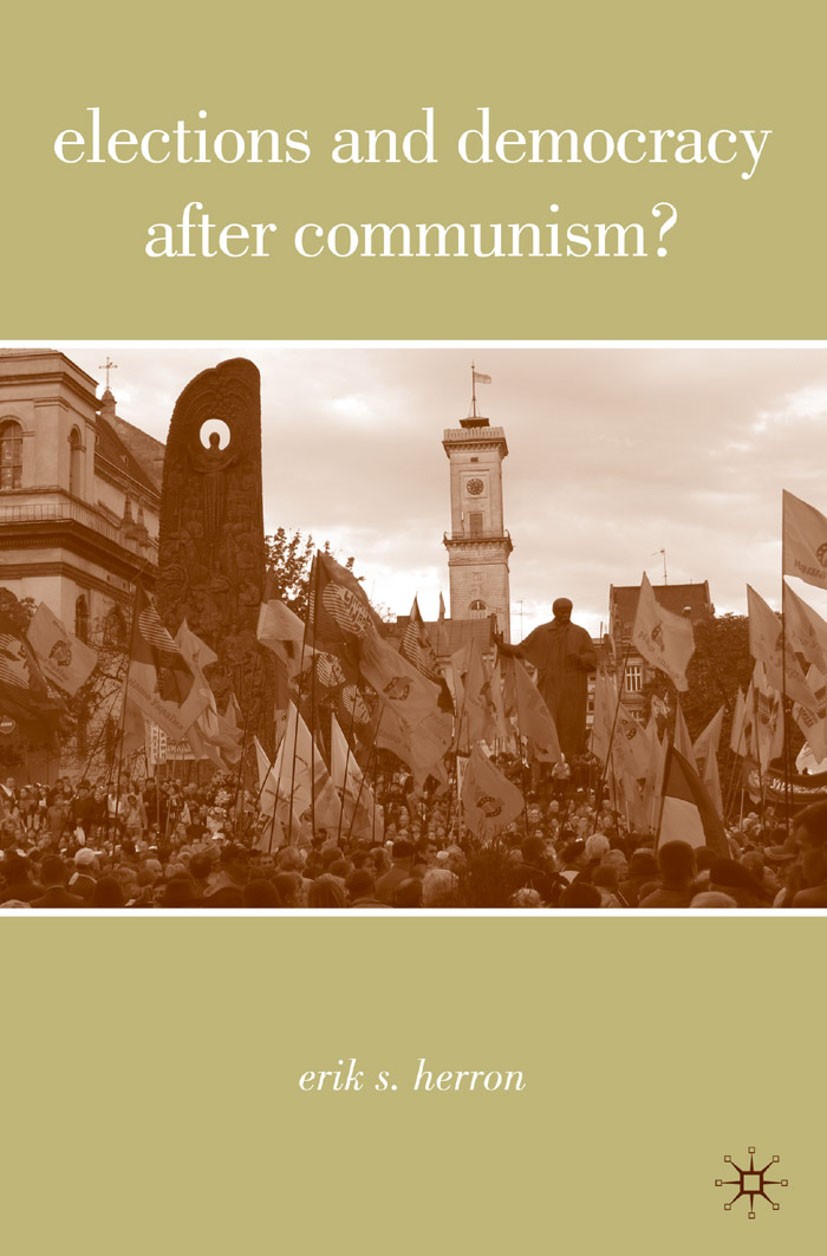
圖書封面Titlebook: Elections and Democracy after Communism?;  Erik S. Herron Book 2009 Erik Herron 2009 communism.democracy.Direct democracy.election.election
描述This book uses elections as a vehicle to explain the unanticipated outcomes of post-Soviet politics. It assesses how the behavior of voters, candidates and government officials is influenced by the Soviet legacy and rational calculations of self-interest and is?the first to address elections across post-Soviet space.
出版日期Book 2009
關(guān)鍵詞communism; democracy; Direct democracy; election; elections; Electoral; Electoral System; government; politi
版次1
doihttps://doi.org/10.1057/9780230621701
isbn_softcover978-1-349-37047-4
isbn_ebook978-0-230-62170-1
copyrightErik Herron 2009
The information of publication is updating

書目名稱Elections and Democracy after Communism?影響因子(影響力)


書目名稱Elections and Democracy after Communism?影響因子(影響力)學(xué)科排名


書目名稱Elections and Democracy after Communism?網(wǎng)絡(luò)公開度


書目名稱Elections and Democracy after Communism?網(wǎng)絡(luò)公開度學(xué)科排名


書目名稱Elections and Democracy after Communism?被引頻次


書目名稱Elections and Democracy after Communism?被引頻次學(xué)科排名


書目名稱Elections and Democracy after Communism?年度引用


書目名稱Elections and Democracy after Communism?年度引用學(xué)科排名


書目名稱Elections and Democracy after Communism?讀者反饋


書目名稱Elections and Democracy after Communism?讀者反饋學(xué)科排名


單選投票, 共有 1 人參與投票
 

0票 0.00%

Perfect with Aesthetics


1票 100.00%

Better Implies Difficulty


0票 0.00%

Good and Satisfactory


0票 0.00%

Adverse Performance


0票 0.00%

Disdainful Garbage

您所在的用戶組沒有投票權(quán)限
沙發(fā)
發(fā)表于 2025-3-21 23:30:56 | 只看該作者
Elections under Soviet Authoritarianism,l institutions bear similarities to their Soviet-era counterparts, some voters seem to be habituated to casting ballots even when their votes are not meaningful, and some politicians rhetorically recall the power of the Soviet era. This chapter describes the common starting point for all of the coun
板凳
發(fā)表于 2025-3-22 03:48:08 | 只看該作者
Electoral System Design and Redesign,e attention to the development and conduct of elections. As Chapters 1 and 2 revealed, even though elections in the USSR did not function like those in democratic societies, Soviet leaders created an elaborate elections infrastructure that performed many of the same functions as its democratic count
地板
發(fā)表于 2025-3-22 05:38:51 | 只看該作者
Citizens and the Incentives to Vote,ng station’s doors were scheduled to open. Over the course of the day, almost two million fellow citizens (88 percent of registered voters) followed their lead, visiting polling stations and dropping sealed ballots into clear plastic urns. The eventual winner, garnering 97 percent of the vote, was t
5#
發(fā)表于 2025-3-22 09:24:55 | 只看該作者
6#
發(fā)表于 2025-3-22 13:01:56 | 只看該作者
Referendums as Direct Democracy,ir Putin’s rule. Nearly two months before election day, parliamentary speaker Boris Gryzlov announced that “we are in fact not conducting parliamentary elections, but a referendum on confidence in the president” (Rosbalt Information Agency 2007). United Russia’s political advertisements reminded Rus
7#
發(fā)表于 2025-3-22 17:36:24 | 只看該作者
8#
發(fā)表于 2025-3-23 01:01:42 | 只看該作者
Assessing Election Quality,ing democracy. The “Colored Revolutions” that swept out the corrupt leaderships of Georgia, Ukraine, and Kyrgyzstan from 2003 to 2005 were sparked by evidence that systematic fraud substantially influenced election results. Post-“revolutionary” politics in these countries has diverged, with Ukraine
9#
發(fā)表于 2025-3-23 02:36:02 | 只看該作者
10#
發(fā)表于 2025-3-23 09:15:08 | 只看該作者
Conclusion,991, the Soviet Union’s collapse introduced fifteen newly independent states with little experience in managing competitive politics and elections. While Estonia and Latvia initially stumbled in efforts to address integration of the Russophone population, all three Baltic states moved steadily towar
 關(guān)于派博傳思  派博傳思旗下網(wǎng)站  友情鏈接
派博傳思介紹 公司地理位置 論文服務(wù)流程 影響因子官網(wǎng) 吾愛論文網(wǎng) 大講堂 北京大學(xué) Oxford Uni. Harvard Uni.
發(fā)展歷史沿革 期刊點(diǎn)評 投稿經(jīng)驗(yàn)總結(jié) SCIENCEGARD IMPACTFACTOR 派博系數(shù) 清華大學(xué) Yale Uni. Stanford Uni.
QQ|Archiver|手機(jī)版|小黑屋| 派博傳思國際 ( 京公網(wǎng)安備110108008328) GMT+8, 2025-10-12 17:37
Copyright © 2001-2015 派博傳思   京公網(wǎng)安備110108008328 版權(quán)所有 All rights reserved
快速回復(fù) 返回頂部 返回列表
安义县| 临城县| 根河市| 浙江省| 峨山| 乌兰浩特市| 特克斯县| 许昌市| 高邑县| 漳浦县| 梨树县| 涪陵区| 临西县| 塔城市| 武威市| 长武县| 沁水县| 济南市| 平塘县| 松阳县| 东明县| 泾川县| 深圳市| 于都县| 门源| 长乐市| 大姚县| 中卫市| 高唐县| 汉寿县| 邢台县| 孟村| 雷波县| 淳化县| 赫章县| 荣昌县| 长岛县| 新宁县| 张家界市| 莲花县| 农安县|